
2026-08-17 · Miguel Soto
Preparing Plumbing Systems for Winter Rains in Santa Ana
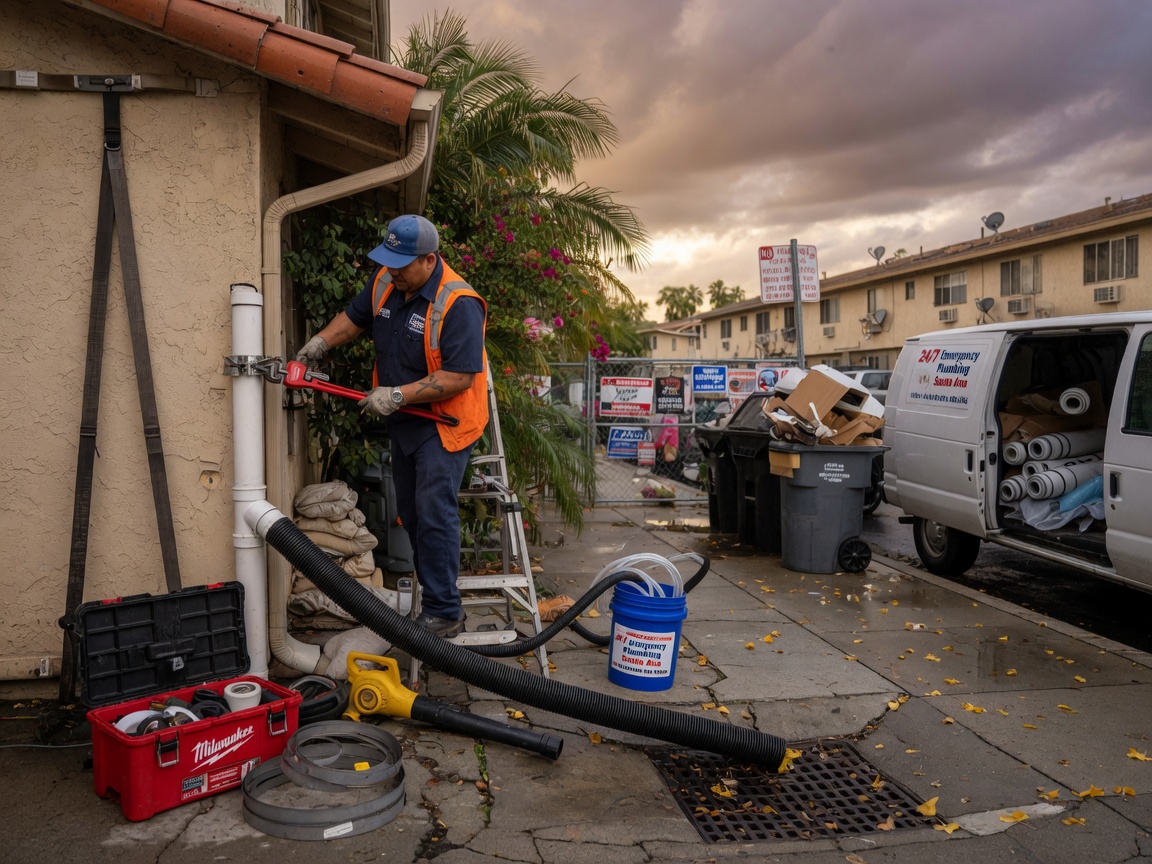
Santa Ana's Mediterranean climate brings mild winters with increased rainfall that can overwhelm unprepared plumbing systems, so the most effective preparation involves clearing drains, checking for leaks, and testing fixtures in the weeks before storms typically begin. This approach prevents backups in areas like the Santa Ana River corridor and reduces emergency calls during heavy downpours. Local conditions in neighborhoods such as Downtown Santa Ana, Delhi, and Heninger Park make proactive checks essential because older homes often have aging lines that struggle with sudden water volume.
Inspecting and Clearing Drains Before Storms
Start by examining all exterior and interior drains for debris buildup that rain will push into pipes. In Santa Ana homes, leaves and sediment from dry summers collect in gutters and downspouts, leading to overflows that flood yards or basements when winter rains hit. Walk the perimeter of the property and remove visible blockages, then run water through indoor fixtures to confirm flow rates. Homes in Park Santiago and Lacy often see slower drainage due to tree roots near sewer lines, so schedule a professional drain cleaning if flow seems restricted. Document any slow spots with photos for reference during follow-up checks.
Next, test every floor drain and shower by pouring several gallons of water and watching for standing pools. This reveals partial clogs before they cause backups during a storm. Focus on bathrooms and laundry areas where hair and lint combine with rain-driven sediment. Properties near the Santa Ana Zoo or Discovery Cube Orange County frequently report issues from shared drainage patterns, making early clearing a practical step that avoids larger problems.
Checking Pipes and Fixtures for Rain-Related Stress
Examine exposed pipes under sinks and in crawl spaces for corrosion or loose joints that winter moisture can worsen. Santa Ana's mild winters still produce enough rain to accelerate wear on older galvanized lines common in French Park and Logan homes. Tighten visible connections and note any damp spots that appear after running water for several minutes. Pay special attention to areas around water heaters, as temperature shifts from dry summers to wet winters can stress fittings.
Test outdoor faucets and hose bibs by attaching a hose and checking for leaks at the valve. These fixtures often fail first during prolonged rain because ground saturation increases pressure on underground sections. In Santa Ana Triangle and Flower Park, older irrigation lines tied into main plumbing can create hidden leaks that surface only after heavy storms. Replace worn washers or valves showing cracks to maintain system integrity through the season.
Preparing Water Systems and Knowing When to Seek Help
Flush water heaters and check pressure relief valves to ensure they handle increased demand from winter use. In Orange County homes, sediment from hard water builds up during dry months and can restrict flow when rains increase overall usage. Run cold water through the system for ten minutes after any maintenance to clear loosened particles. This step prevents sediment from reaching fixtures during the first major storm.
Monitor for signs of trouble such as gurgling sounds or slow toilet flushing, which indicate main line issues that rain will aggravate. When these appear, contact an emergency plumber available Mon–Sat 24/7 and Sun 24 Hours Open based in Santa Ana, CA. For guidance on handling gradual slowdowns safely, review how to clear a slow drain using safe methods before attempting DIY fixes. Consistent preparation keeps systems reliable through Santa Ana's winter rains without unnecessary disruption.